


Latest News

Georgia House Republicans are delivering on their commitment to provide historic property tax relief for homeowners across the state with the introduction of the Homeownership Opportunity and Market Equalization Act of 2026 (Georgia HOME Act) . While property tax assessments have soared, many local governments have left millage rates stagnant or even voted to raise them. This has fueled unfair and unsustainable property tax increases that threaten housing stability and affordability for families across the state. Georgia voters overwhelmingly approved property tax relief in every county in 2024 (HB 581). Despite this clear demand for relief, over 300 local governments opted out of the measure, while some imposed property tax hikes of up to 158 percent in a single year. That’s why Georgia House Republicans are leading to ensure no one is ever forced out of their home because they can’t afford to pay rent to the government. Quick Facts on the Georgia HOME Act Enables the total elimination of homestead property taxes (property taxes on primary residences) by 2032 Provides local governments with the tools they may need to recover lost revenue with an optional, flexible 5-penny local sales tax Allows for optional local assessments and fees Caps revenue growth to 3% for non-improved/non-exempt properties (2032) Provides Homeowner Tax Relief Grants (HTRG) Doubles the State Homestead Exemption every other year until 2032 FREQUENTLY ASKED QUESTIONS How does the Georgia HOME Act impact local education funding? Schools will have access to up to two pennies of local sales tax if needed. In most communities, this will fully replace the money currently collected from homestead property taxes. This ensures schools remain strong and fully funded while providing homeowners with historic tax relief. How will local governments continue to provide essential services? No one cares more about strong schools, public safety, and essential services than the Georgia House, and that is clearly reflected in the Georgia HOME Act. Local governments will have access to tools, including: Assessments for essential services or capital Fees for optional services, if needed. This creates more transparency and accountability for taxpayers, so they know exactly what they’re paying for. What impact does the Georgia HOME Act have on renters? The Georgia HOME Act also provides relief beyond homesteaded properties. It caps revenue growth at 3% for non-homestead properties, which include many rental properties, limiting cost increases that often get passed on to renters. What about communities that won’t be able to make up the loss in homestead taxes with additional sales tax revenue? The vast majority of communities can replace lost revenue using the flexible local sales tax option. For the small number that can’t, the state will provide homestead property tax equalization grants to help make up the difference, ensuring no community gets left behind.
Georgia House Republicans are delivering on their commitment to provide historic property tax relief for homeowners across the state with the introduction of the Homeownership Opportunity and Market Equalization Act of 2026 (Georgia HOME Act) . While property tax assessments have soared, many local governments have left millage rates stagnant or even voted to raise them. This has fueled unfair and unsustainable property tax increases that threaten housing stability and affordability for families across the state. Georgia voters overwhelmingly approved property tax relief in every county in 2024 (HB 581). Despite this clear demand for relief, over 300 local governments opted out of the measure, while some imposed property tax hikes of up to 158 percent in a single year. That’s why Georgia House Republicans are leading to ensure no one is ever forced out of their home because they can’t afford to pay rent to the government. Quick Facts on the Georgia HOME Act Enables the total elimination of homestead property taxes (property taxes on primary residences) by 2032 Provides local governments with the tools they may need to recover lost revenue with an optional, flexible 5-penny local sales tax Allows for optional local assessments and fees Caps revenue growth to 3% for non-improved/non-exempt properties (2032) Provides Homeowner Tax Relief Grants (HTRG) Doubles the State Homestead Exemption every other year until 2032 FREQUENTLY ASKED QUESTIONS How does the Georgia HOME Act impact local education funding? Schools will have access to up to two pennies of local sales tax if needed. In most communities, this will fully replace the money currently collected from homestead property taxes. This ensures schools remain strong and fully funded while providing homeowners with historic tax relief. How will local governments continue to provide essential services? No one cares more about strong schools, public safety, and essential services than the Georgia House, and that is clearly reflected in the Georgia HOME Act. Local governments will have access to tools, including: Assessments for essential services or capital Fees for optional services, if needed. This creates more transparency and accountability for taxpayers, so they know exactly what they’re paying for. What impact does the Georgia HOME Act have on renters? The Georgia HOME Act also provides relief beyond homesteaded properties. It caps revenue growth at 3% for non-homestead properties, which include many rental properties, limiting cost increases that often get passed on to renters. What about communities that won’t be able to make up the loss in homestead taxes with additional sales tax revenue? The vast majority of communities can replace lost revenue using the flexible local sales tax option. For the small number that can’t, the state will provide homestead property tax equalization grants to help make up the difference, ensuring no community gets left behind.
Georgia House Republicans are delivering on their commitment to provide historic property tax relief for homeowners across the state with the introduction of the Homeownership Opportunity and Market Equalization Act of 2026 (Georgia HOME Act) . While property tax assessments have soared, many local governments have left millage rates stagnant or even voted to raise them. This has fueled unfair and unsustainable property tax increases that threaten housing stability and affordability for families across the state. Georgia voters overwhelmingly approved property tax relief in every county in 2024 (HB 581). Despite this clear demand for relief, over 300 local governments opted out of the measure, while some imposed property tax hikes of up to 158 percent in a single year. That’s why Georgia House Republicans are leading to ensure no one is ever forced out of their home because they can’t afford to pay rent to the government. Quick Facts on the Georgia HOME Act Enables the total elimination of homestead property taxes (property taxes on primary residences) by 2032 Provides local governments with the tools they may need to recover lost revenue with an optional, flexible 5-penny local sales tax Allows for optional local assessments and fees Caps revenue growth to 3% for non-improved/non-exempt properties (2032) Provides Homeowner Tax Relief Grants (HTRG) Doubles the State Homestead Exemption every other year until 2032 FREQUENTLY ASKED QUESTIONS How does the Georgia HOME Act impact local education funding? Schools will have access to up to two pennies of local sales tax if needed. In most communities, this will fully replace the money currently collected from homestead property taxes. This ensures schools remain strong and fully funded while providing homeowners with historic tax relief. How will local governments continue to provide essential services? No one cares more about strong schools, public safety, and essential services than the Georgia House, and that is clearly reflected in the Georgia HOME Act. Local governments will have access to tools, including: Assessments for essential services or capital Fees for optional services, if needed. This creates more transparency and accountability for taxpayers, so they know exactly what they’re paying for. What impact does the Georgia HOME Act have on renters? The Georgia HOME Act also provides relief beyond homesteaded properties. It caps revenue growth at 3% for non-homestead properties, which include many rental properties, limiting cost increases that often get passed on to renters. What about communities that won’t be able to make up the loss in homestead taxes with additional sales tax revenue? The vast majority of communities can replace lost revenue using the flexible local sales tax option. For the small number that can’t, the state will provide homestead property tax equalization grants to help make up the difference, ensuring no community gets left behind.
Georgia House Republicans introduce the Georgia HOME Act of 2026 to eliminate property tax on homesteads by 2032.
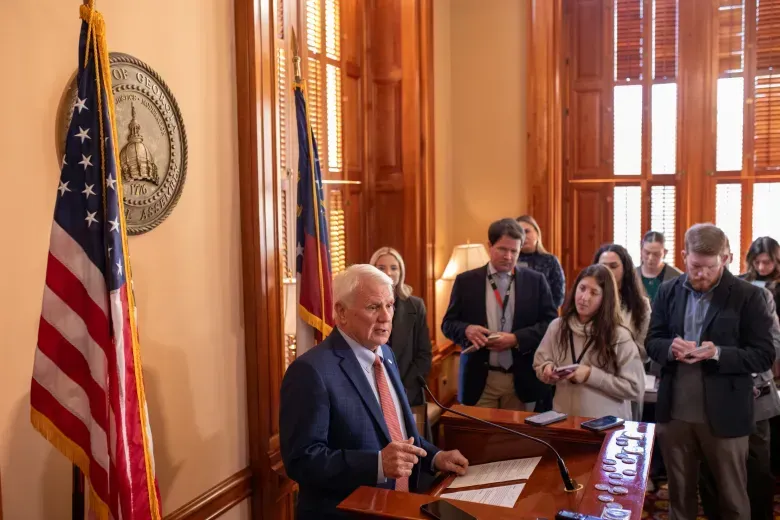
January 7, 2026 ATLANTA - Today, Speaker of the House Jon Burns unveiled his policy agenda for the 2026 Legislative Session, focused on affordability and quality of life for families across Georgia. The Georgia House of Representatives’ 2026 agenda continues to build on last year’s historic tax cuts, reductions in insurance premiums, cost-saving measures, education initiatives, and investments in healthcare by reaffirming the House’s strong commitment to delivering meaningful results, starting with making everyday life more affordable. “This year, the House is not taking our eyes off of what Georgians across the state have told us matters most, and we’re laser-focused on making life more affordable for our fellow Georgians,” said Speaker Jon Burns. “From property taxes and housing costs to healthcare and education, the House is committed to championing commonsense solutions that keep more money in the pockets of hardworking Georgians and create a better, brighter future for each of our neighbors across the state.” 2026 Georgia House Priorities Property Tax Reform: The House will put forward a plan enabling the elimination of the homestead property tax statewide, ensuring homeowners are not priced out of their homes by rising valuations. Homeownership: The House will address housing affordability by focusing on cutting through government red tape and reducing regulatory barriers that drive up housing costs. Healthcare Access: The House will continue working to increase access to quality, affordable healthcare by expanding medical education opportunities and growing Georgia’s healthcare workforce. Literacy: The House will continue its efforts to strengthen literacy outcomes for Georgia’s children by putting forward a plan to place a literacy coach in every elementary school across the state and increasing resources for birth-to-five education. Additional details regarding the Georgia House’s 2026 policy agenda will be announced throughout the 2026 Legislative Session.

The body content of your post goes here. To edit this text, click on it and delete this default text and start typing your own or paste your own from a different source.
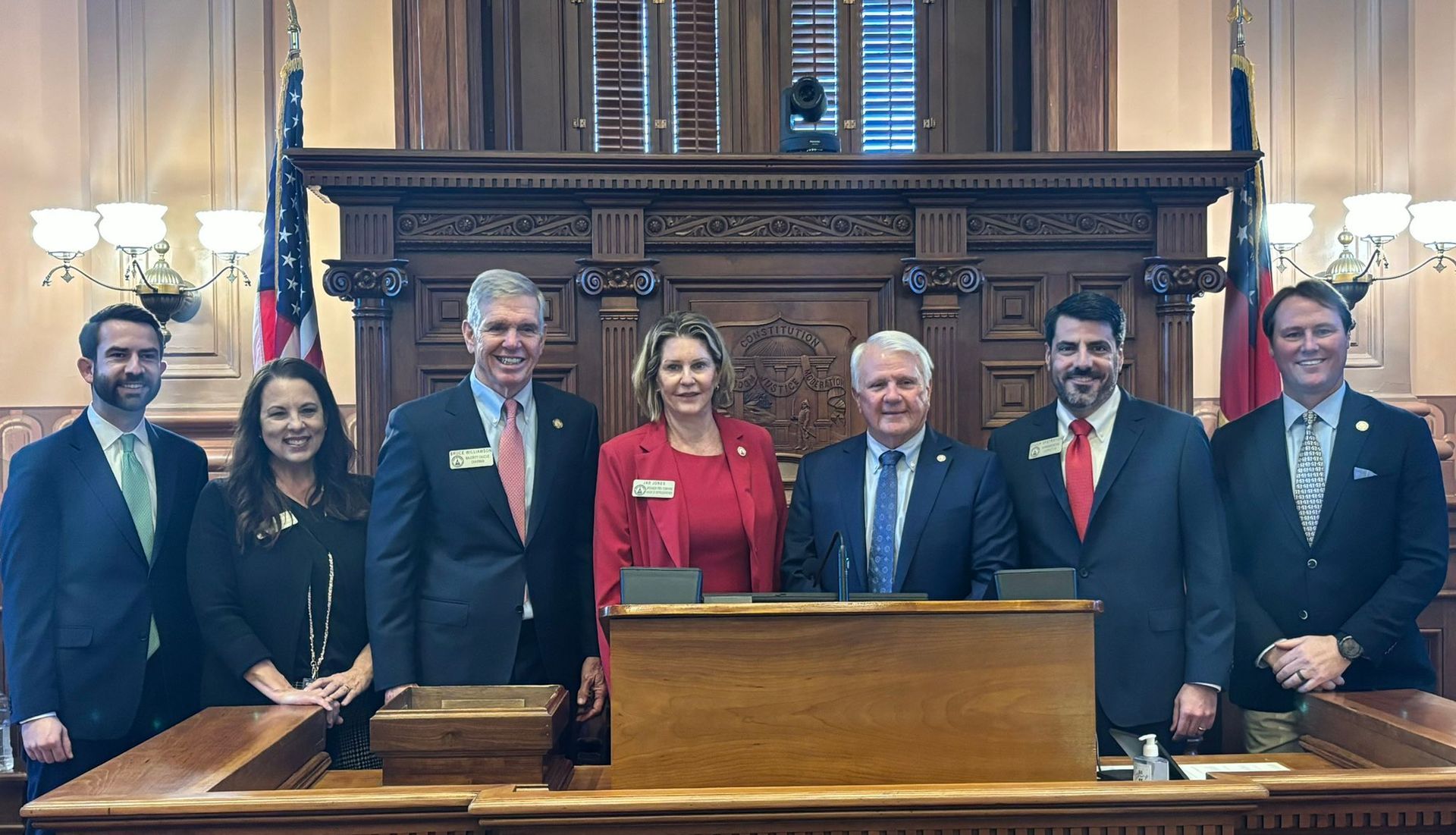
The House Republican Caucus is celebrating major victories, including holding the majority with convincing wins for incumbents in swing districts, and a victory at the top of the ticket for President Donald Trump. “Republican House members have focused on the issues that matter to Georgia voters, cutting taxes for families facing rising costs, keeping communities safe and investing in our children’s education,” Speaker Jon Burns said. “While final counts are still being tallied in Democrat held seats, we are honored by this clear vote of confidence from Georgians.” After last year’s redistricting ruling that reduced the number of Republican seats, House Republicans will hold at least 100 seats headed into the next legislative Session. There are two additional minority majority districts that have less than a 300 vote margin. “We’ve shown the country that Georgia remains a red state, with big wins up and down the ticket,” said Speaker Pro Tem Jan Jones. “We will take this mandate from the voters to continue lowering taxes, protecting our neighborhoods and quality of life and providing more options for Georgia’s students to thrive.” “Washington Democrats’ radical policies have led to spiraling inflation, crime and illegal immigration,” said Majority Leader Chuck Efstration, “and Georgia’s voters know that the only remedy are conservative principles. We’ve led and we’ve delivered on those principles, and the people of Georgia showed tonight they think our state is headed in the right direction even if they think the country isn’t.” “Our caucus has never worked harder to raise the resources needed to not only defend seats in a competitive environment but also go on offense against Democrats, and that effort has paid off,” said Caucus Chairman Bruce Williamson. “I’m incredibly grateful for all of the support we received and so proud of our members who traveled to their colleagues districts to knock doors and turn out Republican voters.” “Keeping our Republican majority in the House is critical to the future of our state,” said Caucus Vice Chairman Houston Gaines. “The bottom line is that Georgia’s conservative leadership is working. That’s why the election results make it clear voters want to keep Georgia moving in the right direction.”
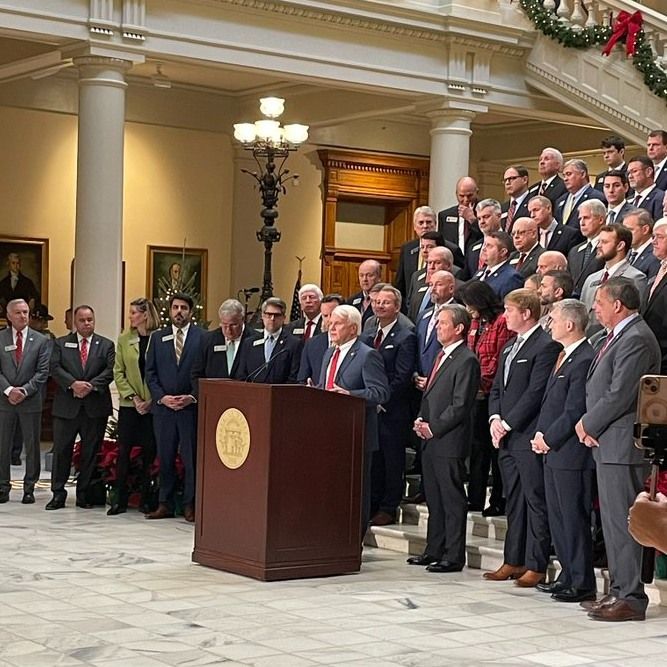
House Republicans Join Governor Kemp to Announce Additional Income Tax Relief Plan

Speaker Jon Burns Issues Statement on Georgia Supreme Court Ruling

Speaker Jon Burns Issues Statement of Support for Israel

Atlanta needs Training Center – officials should have the courage to say so

On Labor Day, Georgia Workers Are Thriving
