Atlanta needs Training Center – officials should have the courage to say so


September 23, 2023

Atlanta needs Training Center – officials should have the courage to say so

FOR IMMEDIATE RELEASE:

September 22, 2023


Georgia’s elected officials at the local, state and federal level should demonstrate a commitment to public safety – not political pandering – by publicly expressing support for the future Atlanta Public Safety Training Center, the House Republican Caucus said today.


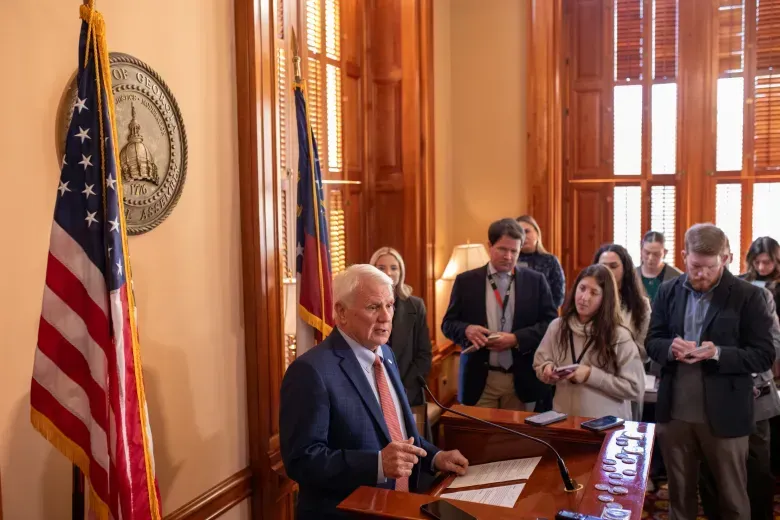
“The City of Atlanta’s plan to build the Public Safety Training Center is a smart solution to a dangerous problem,” said Majority Leader Chuck Efstration. “We’ve heard for years the need for better trained law enforcement officers to de-escalate violent situations. Now, we’re seeing far-left forces — some of which have already destroyed public property and endangered law enforcement officers — fight Atlanta’s efforts to protect the public and preserve law and order. This is ‘Defund the Police’ by another name, and officials from both parties must speak up. Those leaders calling for a referendum should also talk explicitly about why they oppose better training for law enforcement and safer streets.”


Earlier this month, Attorney General Chris Carr announced the indictment of 61 people in Fulton County following a multi-agency investigation into the violence that has occurred at the site of the future Atlanta Public Safety Training Center and other locations. All 61 defendants have been charged with Violation of the Racketeer Influenced and Corrupt Organizations Act. Several of the defendants are also facing separate charges of Domestic Terrorism, Attempted Arson in the First Degree, and Money Laundering. Of the 61 defendants who have been indicted, only 13 are from Georgia.


House Public Safety Committee Chairman J Collins said proper training is essential to retention and recruitment of high-quality officers.


“In recent years, we’ve seen many experienced officers leave the profession, concerned leftist prosecutors would jeopardize their lives for doing their jobs in life-or-death situations,” said Collins. “And in cities like San Francisco we have seen the devastating effects of anarchy and lawlessness when elected officials abdicate their duty to protect life and property. Leadership on public safety – the most important role of government – means investing in facilities like Atlanta’s public safety training center. I’m voicing my support for the center, and I thank Governor Brian Kemp and Attorney General Chris Carr for leading on this critical issue.”


The House Republican Caucus is committed to ensuring Georgians are safe in their homes, businesses, and communities. In recent years, the General Assembly has taken numerous steps to combat human trafficking, prosecute violent gangs and hold prosecutors accountable in the performance of their duties. Working with Governor Brian Kemp, funding for the state’s public safety agencies has also been strategically increased to continue to recruit and retain highly qualified state law enforcement officers to protect residents and visitors alike.


SHARE

January 28, 2026
Georgia House Republicans are delivering on their commitment to provide historic property tax relief for homeowners across the state with the introduction of the Homeownership Opportunity and Market Equalization Act of 2026 (Georgia HOME Act) . While property tax assessments have soared, many local governments have left millage rates stagnant or even voted to raise them. This has fueled unfair and unsustainable property tax increases that threaten housing stability and affordability for families across the state. Georgia voters overwhelmingly approved property tax relief in every county in 2024 (HB 581). Despite this clear demand for relief, over 300 local governments opted out of the measure, while some imposed property tax hikes of up to 158 percent in a single year. That’s why Georgia House Republicans are leading to ensure no one is ever forced out of their home because they can’t afford to pay rent to the government. Quick Facts on the Georgia HOME Act Enables the total elimination of homestead property taxes (property taxes on primary residences) by 2032 Provides local governments with the tools they may need to recover lost revenue with an optional, flexible 5-penny local sales tax Allows for optional local assessments and fees Caps revenue growth to 3% for non-improved/non-exempt properties (2032) Provides Homeowner Tax Relief Grants (HTRG) Doubles the State Homestead Exemption every other year until 2032 FREQUENTLY ASKED QUESTIONS How does the Georgia HOME Act impact local education funding? Schools will have access to up to two pennies of local sales tax if needed. In most communities, this will fully replace the money currently collected from homestead property taxes. This ensures schools remain strong and fully funded while providing homeowners with historic tax relief. How will local governments continue to provide essential services? No one cares more about strong schools, public safety, and essential services than the Georgia House, and that is clearly reflected in the Georgia HOME Act. Local governments will have access to tools, including: Assessments for essential services or capital Fees for optional services, if needed. This creates more transparency and accountability for taxpayers, so they know exactly what they’re paying for. What impact does the Georgia HOME Act have on renters? The Georgia HOME Act also provides relief beyond homesteaded properties. It caps revenue growth at 3% for non-homestead properties, which include many rental properties, limiting cost increases that often get passed on to renters. What about communities that won’t be able to make up the loss in homestead taxes with additional sales tax revenue? The vast majority of communities can replace lost revenue using the flexible local sales tax option. For the small number that can’t, the state will provide homestead property tax equalization grants to help make up the difference, ensuring no community gets left behind.
January 28, 2026
Georgia House Republicans introduce the Georgia HOME Act of 2026 to eliminate property tax on homesteads by 2032.
January 8, 2026
January 7, 2026 ATLANTA - Today, Speaker of the House Jon Burns unveiled his policy agenda for the 2026 Legislative Session, focused on affordability and quality of life for families across Georgia. The Georgia House of Representatives’ 2026 agenda continues to build on last year’s historic tax cuts, reductions in insurance premiums, cost-saving measures, education initiatives, and investments in healthcare by reaffirming the House’s strong commitment to delivering meaningful results, starting with making everyday life more affordable. “This year, the House is not taking our eyes off of what Georgians across the state have told us matters most, and we’re laser-focused on making life more affordable for our fellow Georgians,” said Speaker Jon Burns. “From property taxes and housing costs to healthcare and education, the House is committed to championing commonsense solutions that keep more money in the pockets of hardworking Georgians and create a better, brighter future for each of our neighbors across the state.” 2026 Georgia House Priorities Property Tax Reform: The House will put forward a plan enabling the elimination of the homestead property tax statewide, ensuring homeowners are not priced out of their homes by rising valuations. Homeownership: The House will address housing affordability by focusing on cutting through government red tape and reducing regulatory barriers that drive up housing costs. Healthcare Access: The House will continue working to increase access to quality, affordable healthcare by expanding medical education opportunities and growing Georgia’s healthcare workforce. Literacy: The House will continue its efforts to strengthen literacy outcomes for Georgia’s children by putting forward a plan to place a literacy coach in every elementary school across the state and increasing resources for birth-to-five education. Additional details regarding the Georgia House’s 2026 policy agenda will be announced throughout the 2026 Legislative Session.